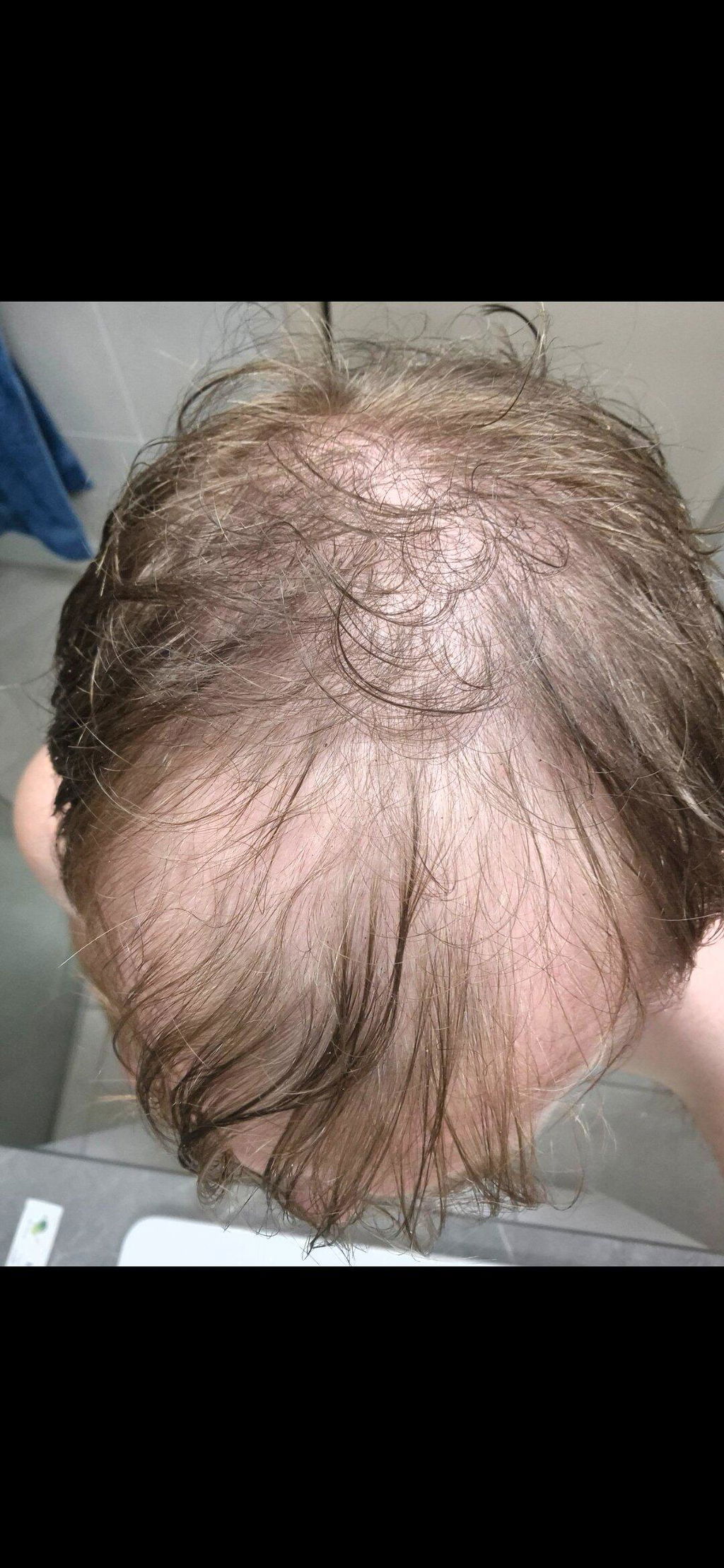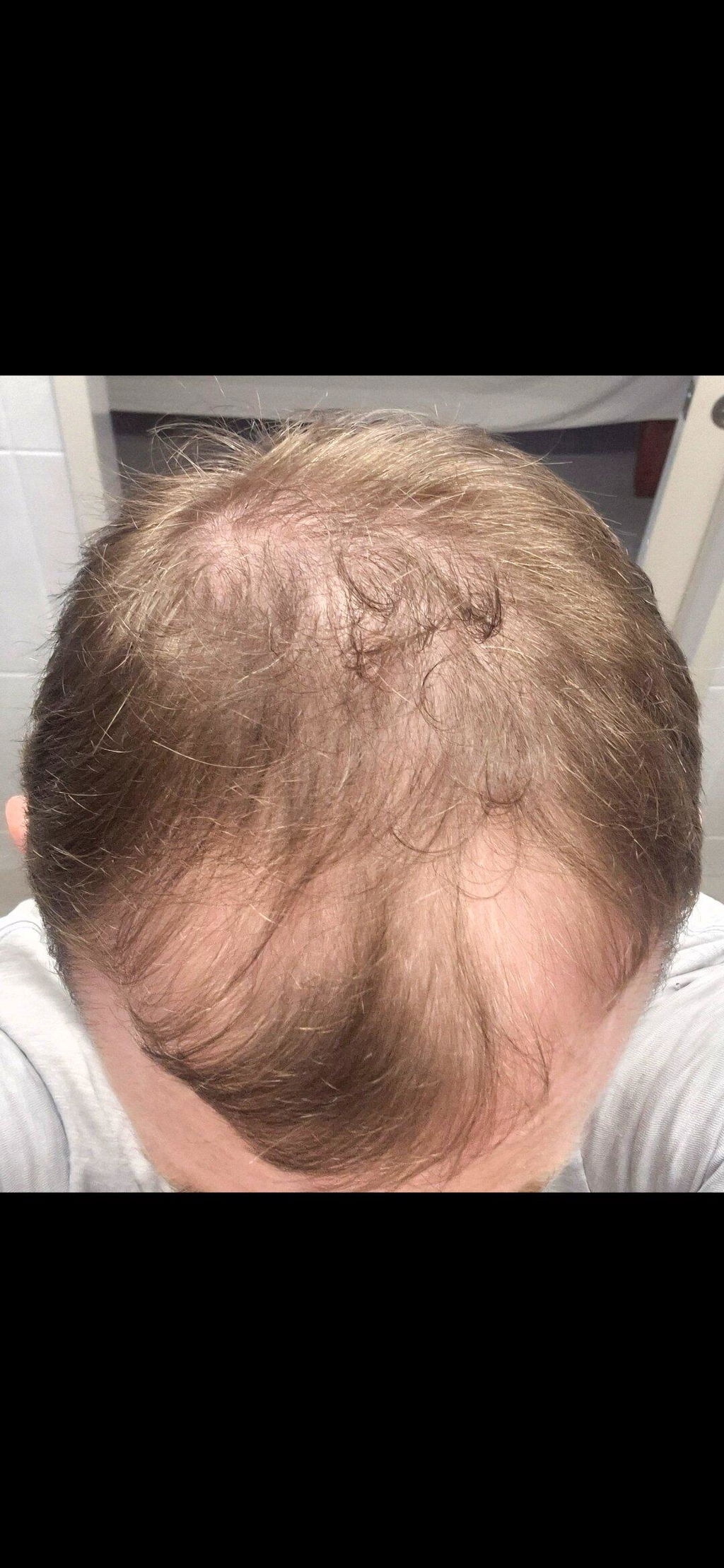


More hair in the shower than usual isn't a crisis, it could just be natural shedding. Your hair is built to cycle through growth, rest and shedding on repeat, whether you notice it or not, and most of what feels alarming is just that process doing its job. This guide breaks down normal shedding, excess shedding and true hair loss, so you can tell which one's actually happening and what to do.
Your hair is constantly cycling
Every strand on your head moves through three phases on repeat, for life.
+ Growth phase (Anagen): 85-90% of your hair, lasting 2-6 years1
+ Transitional phase (Catagen): 1-3% of your hair, lasting 2-3 weeks1
+ Resting phase (Telogen): 5-10% of your hair, lasting around 3 months1

Your scalp holds roughly 100,000 follicles (note: this doesn’t mean you necessarily have this many strands of hair). At any given time, some are resting, and these resting hairs fall out to make way for new growth1.
Losing 50-100 hairs a day is completely normal. This shedding rate also depends on your hair care routine, how often you brush and wash your hair, and your individual hair type.
Why shedding looks worse than it is
If you have thicker or darker strands, you’ll notice shedding more. Compared to thinner, lighter hair, it shows up clearly in the shower or on a brush, even when the amount is completely normal.
The type of hair you have also changes how shedding presents. In tightly coiled hair types, strands are often shorter and have longitudinal fissures (tiny lengthwise cracks along the strand that weaken it), so breakage/snapping are often the real cause of hair loss.
Contrary to what some believe, avoiding brushing or washing your hair won't stop hair that’s due to shed; it will still fall. You may also risk creating or exacerbating scalp conditions, which can reduce the quality of new hair growth.
Normal shedding vs excess shedding vs hair loss
Normal shedding
Washing and brushing don't make you lose more hair, they just release strands that were already ready to fall out. Resting-phase hairs get pushed out by new growth underneath them, typically around the three-month mark.
Visual cue: a small, club-like bulb at the root. Daily shedding of 50-100 hairs is considered normal. This is your hair cycle working as it should1.

Excess shedding
Diffuse thinning where your scalp becomes more visible, most often driven by Telogen Effluvium: over 50% of follicles moving into the resting phase at once1. Triggers include childbirth, crash dieting, surgery, illness, mineral deficiencies, stress, jet lag and starting or stopping the pill1,2. It typically appears around three months after the trigger, not immediately1. Supporting and nourishing the scalp during this window can support the development of new growth to replace the fallen strands. Mane Event Elixir® targets the follicle directly, working to extend the active growth phase, encourage new growth, and reduce shedding within 30 days.
Visual cue: still a club-like bulb, just more of it than usual. Especially if you’ve noticed more hair on your pillow or in the brush.

Breakage (often mistaken for shedding)
Visual cue: shorter fragments, varied lengths, no bulb. This is structural damage from heat, chemical treatment, snagging or styling, not a hair cycle issue. This type of hair loss needs a different approach to address the cause and support the hair's internal strength1.

True hair loss
Pattern baldness, Alopecia Areata and Traction Alopecia all fall into this category. Pattern baldness shows as gradual miniaturisation and a receding or diffusing hairline3,4; Alopecia Areata presents as defined, round, patchy bald spots5; Traction Alopecia as thinning from sustained tension, often at the front hairline.

At-home checks
Hair pull test: gently pull a section of 50-60 hairs. Fewer than 3 come away, negative. 3 or more, positive, suggesting excess shedding6. Even with a negative result, unusually high shedding beyond two to three weeks warrants a GP check6.
Photo tracking: Use the same lighting, location, angle and hair state, and take photos every three months. More frequent checking rarely shows anything new and can fuel unnecessary anxiety. See our how-to guide for advice on capturing your hair and scalp progress at home.
When to see a hair and scalp professional
Trichologist: A trichologist can be an excellent source of information for creating a healthy foundation for your hair and scalp. Useful when dealing with hair and scalp disorders such as Telogen Effluvium, dandruff, dermatitis and Traction Alopecia.
Dermatologist: for more complex hair and scalp disorders such as pattern baldness, any form of alopecia, infections or persistent and severe scalp conditions4. Ask your GP for a referral directly, ideally to one that specialises in alopecia.
Building a healthy foundation
A healthy scalp is the foundation your hair grows from. A balanced, well-cared-for scalp gives hair the best possible environment to grow, thicken, and stay anchored. Whether you’re managing shedding, more pronounced loss, or supporting what you’ve got, a consistent, well-rounded routine matters more than any single product.

Cover the basics of a healthy scalp with gentle cleansing, regular scalp exfoliation, adequate hydration, and a consistent supply of nutrients that feed the follicle from within, whether through diet or a targeted internal supplement. Apotecari’s Mane Event® capsules are formulated to address common nutritional gaps associated with shedding, delivering key vitamins and minerals to the follicle from within. Addressing dryness, oil imbalance, yeast overgrowth, and stress supports the same goal. Apotecari’s Crowning Glory® capsules target scalp balance from within, supporting a calmer, hydrated, and better-regulated environment for hair to grow.
Shedding and hair loss aren't the same thing. Both present differently and stem from different causes. Regular shedding of 50-100 hairs a day is perfectly normal. Excess shedding, such as Telogen Effluvium, tends to settle on its own within three to nine months, once the underlying trigger resolves and the growth cycle normalises. This is where consistency with your routine matters most, give it time to work with your hair's natural cycle.
If your hair loss is more complex, patterned, or progressive, or if it isn't responding and continues beyond three months of consistent use, we suggest speaking with a professional. However, if you notice scalp changes, discolourations, or markings, along with angry, tender, or inflamed skin, we would suggest seeking professional guidance as soon as possible.
References
1 Chang FLC. Hair shedding. DermNet (DermNet New Zealand Trust); November 2019 (page updated May 2024). https://dermnetnz.org/topics/hair-shedding
2 Bell H. Diffuse alopecia. DermNet (DermNet New Zealand Trust); October 2019 (page updated May 2024). https://dermnetnz.org/topics/diffuse-alopecia
3 Birchall NM, Sinclair R. Male pattern hair loss. DermNet (DermNet New Zealand Trust); 1998, updated July 2015 (page updated August 2025). https://dermnetnz.org/topics/male-pattern-hair-loss
4 Yip L, Sinclair R. Female pattern hair loss. DermNet (DermNet New Zealand Trust); 2007, updated July 2015 (page updated May 2024). https://dermnetnz.org/topics/female-pattern-hair-loss
5 Oakley A, Bell H, Coulson I. Alopecia areata. DermNet (DermNet New Zealand Trust); 1997, updated July 2024 (page updated March 2026). https://dermnetnz.org/topics/alopecia-areata
6 Hair presentation test. Australian Journal of General Practice.
https://www1.racgp.org.au/ajgp/2024/december/hair-presentation-test
Accessed: 26 August 2026.